Tuesday, September 4, 2012

THINK WORDLY. SERVE LOCALLY.

THINK WORDLY. SERVE LOCALLY. A quick way to burn through your highlighting pen is to download and peruse the World Economic Forum’s remarkable compilation of essays, Global Population Ageing: Peril or Promise?
 
The report’s “Introduction” makes a compelling case for giving priority to aging issues, and for absorbing the wealth of knowledge bound within. “In an historical context, population ageing is one of the most remarkable human success stories of any era, reflecting contributions of public health, medicine, education and economic development. But capturing and unlocking the full benefits of that success require that we adapt our perspectives and reform our institutions. The good news is that there is a wide range of behavioural changes and public policy responses to population ageing that would simultaneously avoid a significant dampening of economic growth and enhance the quality of life for people reaching older ages today and for generations to come.”
 
Eskaton’s approach to “think worldly, serve locally” has generated several contributions to the international dialogue on aging. The organization’s identity as a progressive aging-services provider is well-known throughout its service areas in Northern California, and even across the United States. The extent to which the brand reputation reaches around the world is both inspiring and humbling, as well.
 
This spring a 12-person delegation of South Korea government officials toured The Parkview, the Eskaton-managed assisted living and memory care community in Pleasanton, California. The research and advisory team was led by Lee Moo-Seung, president of the Social Welfare Foundation or, as his business card stated, “Director, Old Man’s Specialty Recuperation Facility.”
 
Australia frequently sends contingents to California to tour Eskaton’s communities and the National Demonstration Home in Roseville, and to meet with various executives and practitioners. The next walkabout is slated for next month.
 
Global demand continues for Longevity Rules, the book published by Eskaton in 2011. Recent requests for the compendium of provocative essays on aging have come from groups of retirement facilitators in Paris and Munich, as well as the Legislative Library of Support Services in Saskatchewan, Canada. Conveners of the United Nations Conference on Aging and Technology in Geneva also shared the text with participants. Notably, two of the book’s authors Laura Carstensen and S. Jay Olshansky also contributed multiple essays to Global Population Ageing.
 
Eskaton’s Longevity Rules blog posts (www.longevityrules.blogspot.com) and Twitter feeds (https://twitter.com/longevityrules) are trending worldwide -- most recently attracting the United Nations Committee on Aging as a follower.
 
And of course the international media coverage was overwhelmingly positive for the Eskaton “Thrill of a Lifetime” for Mino Ohye earlier this year, which reunited our West Sacramento resident with his brother in Japan from whom he was separated for six decades.

Friday, August 31, 2012

ESKATON KIDS CONNECTION MATURES BEYOND YEARS.

ESKATON KIDS CONNECTION MATURES BEYOND YEARS. In school years, the four-year-old Eskaton Kids Connection would be a preschooler. Getting our feet wet, learning the ropes. The heavy lifting -- expectations, real learning, measurements -- would be years away.
 
All of which makes the program’s premature growth so noteworthy.
 
This year more than 500 older adults -- residents in Eskaton’s independent, assisted living, skilled nursing and memory care communities -- will partner-up with an equal number of students from local elementary schools. With scheduled monthly gatherings and routine Skype session in between, the Connections are filled with reading and writing, singing and celebrating, crafting, playing and plenty of laughing. It is a unique learning experience -- cross-generational and very reciprocal.
 
Especially gratifying and humbling to witness are the purposeful relationships developed between the buddies. Though the Connections formally end with the school year, for each of the past three years a number of buddies continue to stay in touch, with the enduring attachments producing added value.
 
Adolph, 90, and Connor, 10, established a sort of surrogate grandfather-grandson relationship that exemplifies the intensity of this benefit. The two buddies stayed in touch through the summer with letters and occasional visits by Connor and his mom to Adolph’s Eskaton Care Center -- most recently to celebrate the older buddy’s 90th birthday. It was a cheerful validation of the friendship.
 
This summer after Adolph succumbed to his long battle with leukemia. His daughter let Connor’s mom know that her father had his young buddy’s photo by his bedside, and that “He adored Connor and was so thankful for having him in his life.” Sad as Adolph’s loss is, it is an experiential addition to Connor’s and the Eskaton Kids Connection’s life-long learning curve.
 
Addendum: Connor wrote a goodbye letter to Adolph that he read at his buddy’s service. “I remember when we first met I was a little nervous, I was worried you might be mean. After meeting you and getting to know you, you were really nice. ... I am really going to miss you, we had good times. ... Maybe we will get another opportunity to play checkers, if they have them in heaven. Love, Connor (Your Jr. Buddy)”

Tuesday, August 28, 2012

HONK IF YOU CARE.

HONK IF YOU CARE. The big red plastic nose on “Densmore the Clown” (aka Denise Wilson) begs to be honked. Just as much as her broadly painted smile seeks reciprocation. The 73-year-old resident of Eskaton Village Carmichael (a continuing care community in Northern California) has been clowning around for three decades, with appearances scheduled for some time to come.

“My focus now is mostly on entertaining developmentally disabled adults and participants in Alzheimer’s adult day centers,” Wilson explains. She earned the official “caring clown” recognition by completing an intensive training program at a prestigious Canadian clown camp. Though she’s well-versed in parades and parties, and balloon animals and ukulele sing-alongs, she says she experiences the greatest satisfaction with her craft when witnessing the therapeutic benefits of humor and laughter.

Tuesday, August 21, 2012

ESKATON’S REALITY SHOW ENTERS FIFTH SEASON.

ESKATON’S REALITY SHOW ENTERS FIFTH SEASON. When is a picture worth a thousand words? Almost always.

After all, when describing an older adult community and its residents how many ways are there to say active, vibrant, quality, innovative, attractive, personal, compassionate? At what point are such habitually applied “differentiators” essentially rendered irrelevant? If not already, then very soon.

On the other hand, consider the image of a genuinely satisfied resident sharing a moment a friendly administrator. It tells a story beyond words.

As Eskaton plans a new series of print and TV advertisements, our residents and program participants will for the fifth year be the stars of the show, easily eclipsing the even most original accompanying language. And that’s how it should be. Show, don’t tell.

Monday, August 20, 2012

WOOD WORK AND PLAY WITH ESKATON.

WOOD WORK AND PLAY WITH ESKATON. They’re gearing up already, the volunteer craftsmen at Eskaton Village Carmichael, to produce another batch of 100 wooden push cars as holiday gifts for kids in the U.S. Marine Corps Reserve's Toys for Tots program.

The tradition began 10 years ago, taking advantage of the continuing care community’s well-equipped woodshop, and has benefited from the time and talents of a revolving team of woodworkers. Village residents Jim Jackson (photo) and his buddies Doug Darmsted and Sterling Parrish staff the project’s most recent production line.

The Village’s toy story epitomizes Eskaton’s wide-ranging commitment to volunteerism, recently recognized with a salute to nearly 300 individuals throughout the organization who’ve contributed time and resources to public-service endeavors in the past year.

Tuesday, August 14, 2012

NEWEST CENTENARIAN CELEBRATES RADIO, MOON LANDING AND 100TH BIRTHDAY.

NEWEST CENTENARIAN CELEBRATES RADIO, MOON LANDING AND 100TH BIRTHDAY. Amy Smith, who turns 100 today, August 14, explains that the extraordinary lifetime accomplishment ranks right up there with getting her first radio and watching the moon landing. The Eskaton Lodge Gold River resident joins three-dozen other centenarians living in Eskaton communities throughout Northern California.

Smith enjoys sewing, crocheting and knitting for fun and occasionally profit -- though her late husband joked that she probably earned about a nickel an hour for the intricate craftwork.

Prior to moving to Eskaton in 2006, Smith lived in Auburn, California, where she helped run a family-owned filling station and grocery store. Born in rural Nebraska, Smith’s fond memories include watching her father work as a blacksmith and her first Halloween dance when she met the young man who would become her husband. The couple had one son.

Eskaton provides community living and home support for more than 3,500 older adults. As the “Official Sponsor of Longevity,” the nonprofit organization has been helping older adults maintain their independence, connections to friends and family, and healthy lifestyles for more than four decades.

Tuesday, August 7, 2012

ARRIVALS AND DEPARTURES, WITH NO GUILT TRIPS.

ARRIVALS AND DEPARTURES, WITH NO GUILT TRIPS. Eskaton’s colorful banner in Sacramento International Airport’s new billion-dollar Terminal B hangs prominently above the 6 million passengers coming and going each year. It’s not the most likely of places to advertise Eskaton’s community living and home support for older adults. But it’s no flight of fancy either.

The calculated choice makes sense on a couple of fundamental levels. The annual cost -- equal to about a week of TV advertising in the Sacramento market -- produces roughly the same number of impressions per dollar.

More importantly, though, Eskaton’s expects the venue’s exposure to (subliminally) capture the hearts and minds of travelers coming to visit family or leaving family behind. This said, the ads themes are very subtle and inspiring -- not guilt trips. The rotating banners read: “Welcome home,” “Longevity Rules” and “Friends for Life.”

Tuesday, July 31, 2012

A STITCH IN TIME.

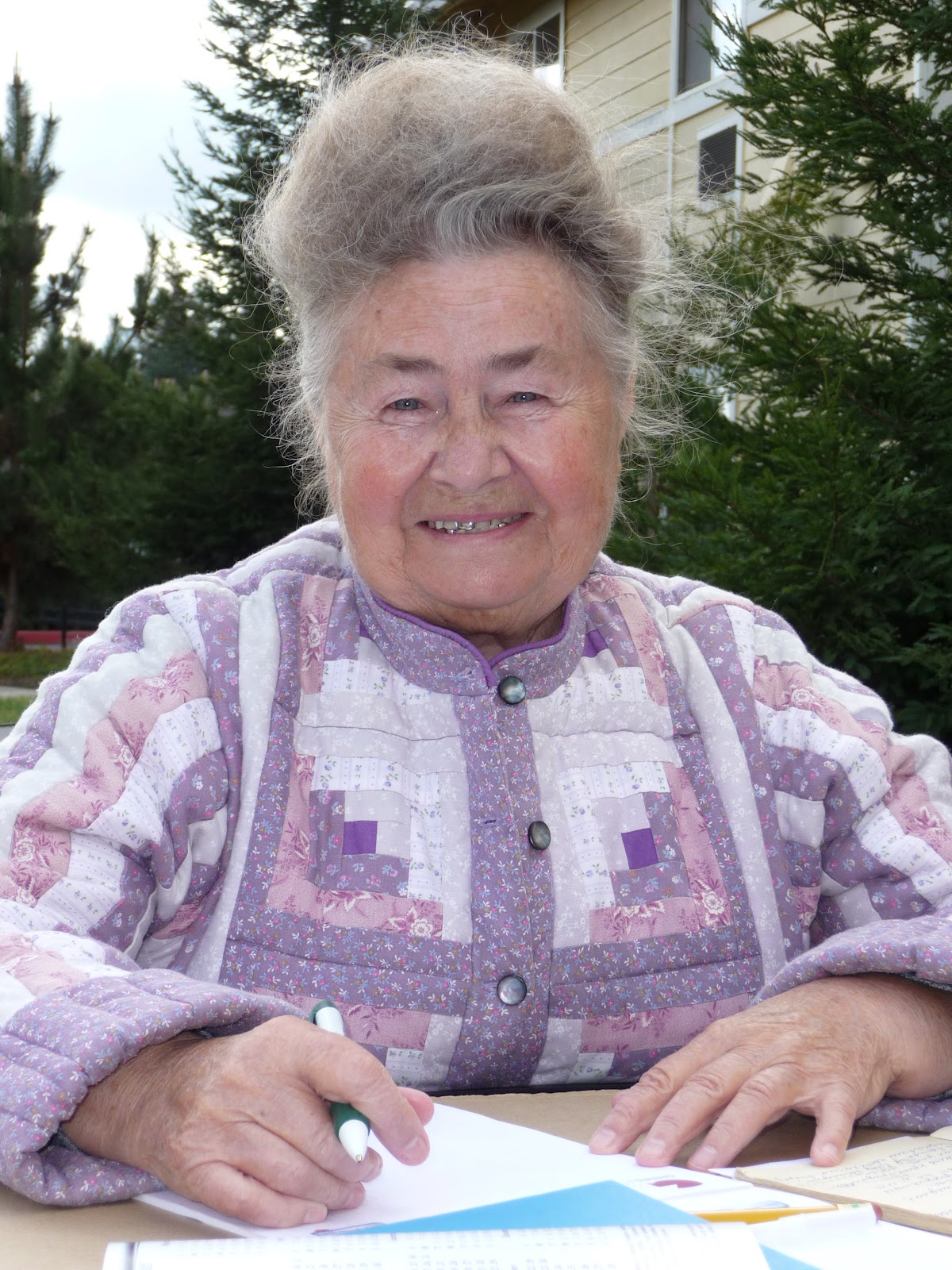
A STITCH IN TIME. Eighteen older adults, for years neighbors and acquaintances, are now fast friends, too. Artfully and forever connected, the Eskaton Henson Manor residents and neighbors are students in the community’s “Artists in Residence” program. As part of the current course’s two-month learning experience, each budding artist created a colorful patch to contribute to a flower-themed quilt. The resulting composite artwork, coordinated and stitched together by the affordable apartment community’s administrator, Donna Garrett, will be auctioned to raise tuition money for the next class of art students.

With study upon study validating the benefits of socialization, creativity and purpose amongst older adults, it’s easy to make case here for doubling the preventative measure of “a stitch in time saves nine.”

Tuesday, July 24, 2012

TAKE THE INITIATIVE ... AND SELL IT.

TAKE THE INITIATIVE ... AND SELL IT. [PART II] Remember that Babe Ruth analogy. Considered the greatest baseball ballplayer of all-time, The Bambino hit less than one homerun for every 10 at bats. So, with due humility, here are 10 successful initiatives of the 10 times as many ideas that have been pitched within Eskaton.

Their success can be attributed to effective Planning, Purpose and Priority.

Thrill of a Lifetime by Eskaton -- The gameplan for this “dream come true” campaign explains how it inspires everyone involved, the participants as well as employees, volunteers, sponsors and news media.

Eskaton Celebrates 100+ -- Celebrate our three-dozen-plus centenarians and promote Eskaton as the “Official Sponsor of Longevity.”

Eskaton Kids Connection -- This signature Eskaton experience has grown in three years from one class of elementary school students visiting with 30 residents, to more than 500 student-resident buddies throughout Eskaton.

Eskaton “Dawn of a New Day” Memory Care -- New memories are made every day with this forward-thinking approach dementia care.

Eskaton Veterans Appreciation -- West Sacramento’s first Veterans Day Parade launched the initiative; holiday celebrations regularly honor our hundreds of vets.

Eskaton’s Urban Gardens -- This growing concern highlights Eskaton’s commitment to resource conservation, sustainability and healthy eating -- a trifecta of contemporary (Boomer-friendly) causes.

Eskaton / CSUS Student Living andLearning Experience -- A gerontology student from California State University, Sacramento benefits from a practical education by living in older adult community for a year.

Artists for Alzheimer’s -- The ARTZ partnership brings artwork to memory care communities, and residents to museums.

Keep Connected with Eskaton -- This new initiative will connect residents with remote family members and friends using eLiving, Eskaton’s proprietary online social and video connection.

Longevity Rules with Eskaton -- The multimedia public outreach campaign helped build Eskaton’s national reputation.

It takes the best of intentions -- starting within the organization, from the top on down -- to make good ideas work. [SEE PREVIOUS POST, PART I -- JULY 23]

Monday, July 23, 2012

RESISTANCE-PROOF YOUR IDEAS.

RESISTANCE-PROOF YOUR IDEAS. [PART I] There are a number of reasons many great ideas never amount to more than “great ideas.” Insufficient expertise, resources, finances and time obviously can reasonably stifle creativity. However, internal resistance is a particularly dispiriting excuse.

Most employees these days perceive themselves to be stretched thin as is. The prospect of being tasked with more work, with which they do not associate any personal recognition or financial benefits, is less than motivating.

Though your workforce may not know of Peter Drucker’s tongue-in-cheek warning that “Every great idea eventually deteriorates into work,” their intuition about such things obliges consideration.

Several fundamental strategies can preempt this push-back and even encourage buy-in:


1.     Involve operational staff in the planning process. Their on-the-ground perspective offers a reality check on available resources not always recognized by management. Then, use operational staff to champion the project among coworkers.

2.     Explain the purpose, with relatable context. If it is simply to increase revenue, then communicate how this translates to “opportunity” in terms of future growth, more jobs and job security. If the operational benefits apply to marketing potential, explain this connection. For new initiatives to be promoted with conviction to consumers, they need to be understood and embraced internally first.

3.     Prioritize the implementation. Respectfully, assume workers are busy and that they do not have a block of time set aside to take on new projects. (See Parkinson’s Law: Work expands so as to fill the time available for its completion.) If now a highest priority, explain why and how other tasks can be rearranged to accommodate the new focus.

With Eskaton and a number of other aging services providers across the country, operations and marketing teams are conspiring on creative strategies to build census -- immediately and for years to come.

[NEXT POST, PART II -- JULY 24] Of Eskaton’s multiple initiatives, effective Planning, Purpose and Priority facilitate their implementation. While, others, still in various stages of development, require more resistance-proofing.

Tuesday, July 17, 2012

“WIN THIS ONE FOR THE GIPPER.”

“WIN THIS ONE FOR THE GIPPER.” “Why not an actor, we’ve had a clown for four years.” So read the best bumper sticker in the history of politics, sported during the 1980 presidential campaign as the Reagan camp’s response to President Carter’s aspersions. The Gipper’s self-depricating humor endeared him to many, but more importantly, strategically marginalized real concerns.

It was a tact he employed most memorably in his presidential debate with Walter Mondale. “I am not going to make age an issue in this campaign. I am not going to exploit for political purposes my opponent’s youth and inexperience,” Reagan famously quipped. The audience roared with laughter and, once again, his wit took the wind from one of the opposition’s fundamental campaign themes.

There’s a lesson here, and it goes beyond the obvious that humor and humility are much appreciated qualities.

THE ART OF INDIRECTION. For those of us tasked with promoting aging and aging services as rewards rather than burdens, it is this: The target audience for our messaging is not older adults as much as it is everyone else. Older adults already know who they are and what services they need and want. We need to connect with younger adults, whose denial and fear of aging does an injustice to the inevitable process. These are the people whose attitudes and actions influence those of older adults -- both intentionally and subliminally.

Only by adjusting their behavior will overall public regard for longevity improve. Directed to younger generations, there needs to be a substantive, but clever public awareness initiative to exploit and project the benefits of aging -- experience, perspective, patience, purpose ... time, among others.

THE PUNCH LINE IS SOLID. Clearly, “Longevity is good.” The set-up and timing need some work, though.

Comedians (and sometimes astute politicians) effectively apply the art of indirection. They lure unsuspecting audiences with the obvious and, surprise, catch them off-guard. (Pfizer’s just launched “Get Oldcampaign attempts to showcase aging from a different, unexpected perspective.)

Watch for more to come on this. In the meantime, consider a campaign that declares “Longevity Rules” and reminds us of rule number 1: “Aging is better than not.”

Tuesday, July 10, 2012

HOME ALONE? NOT ALWAYS BEST.

HOME ALONE? NOT ALWAYS BEST. “Everyone is entitled to their own opinion, but not their own facts,” U.S. Senator Daniel Moynihan famously declared. In marketing and sales and advertising (and yes, occasionally even public relations) opinions are often miscast as facts.

So we are fortunate that new research now validates a key sales pitch used routinely to attract people to older adult communities. It is now fact: Socialization is healthy and can extend life expectancy.

Conversely, the social pain of loneliness produces changes in the body that mimic and essentially accelerate the aging process, according to a new study by Cornell University. The study specifically determined that loneliness increases the risk of heart disease and other health problems later in life. On a positive note, lead researcher Anthony Ong concluded, “One of the most important and life-affirming messages of this research is the reminder that we all desire and need meaningful social connections.”

Another new study by geriatricians at the University of California, San Francisco confirms that older adults who feel isolated and unhappy are twice as likely to have declining abilities to perform so-called activities of daily living; and 45 percent more likely to die than older adults who felt meaningfully connected to others.

(In my opinion) these findings, as is often the case with popular research, simply reinforce a commonly held belief. Still, they do offer older adults and their families impartial, factual information as they struggle to distinguish the benefits of community living versus aging-in-place.

Monday, July 9, 2012

THE HEADLINE READS “DECLARING INDEPENDENCE.”

THE HEADLINE READS “DECLARING INDEPENDENCE.” On the front page of the Sunday Sacramento Bee (7-8-12) the color photograph of five older adults laughing shows what the 82-inch story proceeds to tell. Among this friendly group of residents at the Eskaton Roseville Manor multiservice community, are Jackie and Bill Merz. When asked about offers from their kids to come live with them, Jackie exclaimed that as much as she adores them, “I told them we’d have somebody shoot us before we did that.”

“Most older adults tend to be a bit more euphemistic about it,” said Anita Creamer, the Bee’s senior writer who authored the feature on older adults living on their own. The desire to remain as independent as possible is a recurring theme with many residents of older adult communities. And not simply to avoid burdening their families.

More so, Eskaton residents point to the engaging lifestyle, friendships, activities, security, modern conveniences and healthcare when needed as reasons for choosing community living.


Monday, July 2, 2012

PUT A PILLOW OVER MY HEAD!?

PUT A PILLOW OVER MY HEAD!? Sadly, it is not uncommon for a young, healthy individual to whisper “Just kill me” or “Put a pillow over my head” upon witnessing the plight of a very old, frail and infirmed person. Two things are not taken into account, unfortunately, with such disparaging perspectives: 1) The objectionable remark is incredibly disrespectful to the individual who is challenged to value every moment of life; and 2) No one knows with certainty the value they will place on their own life, given similar circumstances, until they personally experience it.

Avoiding ageism, as with all forms of prejudice and negative stereotyping, often requires observers and communicators to carefully view situations from another’s perspective.

Aging is inevitable ... and unpredictable. Walking aids, feeding tubes and memory care may not be standard issue, but for some these supports are not optional. Yet no physical or mental decline is likely to be as frustrating or challenging or sad as accepting the notion that for all the individual effort, some more fortunate observers still reflect: “There, but for the grace of God, go I.”

Thursday, June 28, 2012

ESKATON’S CONNECTIONS GO CYBER.

ESKATON’S CONNECTIONS GO CYBER. The grand opening today of Connections Café at Eskaton Jefferson Manor marks an extraordinary place in time. When nonprofit groups establish creative, mutually beneficial partnerships to extend the scope of their services. Where older adults can enjoy a hot, nutritious meal; and connect with the Internet and with one another.

About 100 healthy meals were served today at the Connections Café, courtesy of the Asian Community Center's Meals on Wheels, a Sacramento area nonprofit nutrition program that coincidentally served its one millionth meal today as well. The newest among ACC’s 23 nutrition locations, Eskaton Jefferson Manor is unique as the first to combine the free daily meals with free use of touch-screen computers and Internet access.

The Connections Café demonstrates Eskaton’s commitment to expanding social services for its affordable housing residents. With the success of Connections Café as a model, the organization anticipates scaling to a chain of cafes to serve more of Eskaton’s 15 affordable apartment communities throughout Northern California and the surrounding neighborhoods.

Tuesday, June 26, 2012

QUIETCARE SPEAKS VOLUMES IN ESKATON COMMUNITIES.

QUIETCARE SPEAKS VOLUMES IN ESKATON COMMUNITIES. Eskaton’s initial installation of the innovative QuietCare remote monitoring system is creating quite a buzz among residents, family members and staff. The unobtrusive technology, discreetly situated in residences, is performing around-the-clock as anticipated -- identifying anomalous patterns in residents’ routines and lifestyle patterns; and prompting caregivers to make more informed, quicker responses.

Deployment of the evolutionary motion sensors, developed by GE/Intel joint venture Care Innovations, will be complete in all Eskaton independent living, assisted living and memory care communities by the end of the year.

Eskaton is conducting research to track the long-range benefits of the monitoring system. In the meantime, anecdotal reports have already confirmed a number of resident health and safety interventions. Family members also are expressing added reassurance with the enhanced care. And sales and marketing teams are using QuietCare as a signature differentiator with consumers, who seem to appreciate Eskaton’s commitment to such innovation and early adoption of new technologies.

Monday, June 25, 2012

MULTI-TASK: LIVE AND LEARN.

MULTI-TASK: LIVE AND LEARN. A young gerontology student living amongst older adults? Whether inspired or obvious, it is nonetheless an unprecedented experience that Eskaton and California State University, Sacramento partnered to launch at the beginning of 2012.

The student, Yovana Gojnic, and her Eskaton Henson Manor neighbors share many similar interests -- cooking, gardening, reading, communicating with friends and family over the Internet, and volunteering with the students from the nearby school.

So it isn’t all that surprising how effortlessly she is connecting with fellow residents. Except for the fact that the ages of the other 90-100 residents at Henson Manor in Sacramento, one of Eskaton’s 15 affordable-living communities for older adults, range from two to three times that of the 29-year-old Gojnic.

As she works toward her Master’s degree in gerontology and public policy at California State University, Sacramento, she agreed to be the program’s first student to participate in this innovative immersion learning project, the “Eskaton / CSUS Student Living and Learning Experience.”

The year-long experience earns Gojnic program credit as she lives and learns with older adults. Consistent with the purpose of the “applied research” project, Gojnic will participate in nutrition and cooking classes, book clubs, expansion of community’s urban garden, a veterans appreciation initiative, computer training and similar projects – all of which will be chronicled for review by CSUS and Eskaton staff. A goal for Eskaton in championing the concept is to encourage peer organizations and local universities across the country to adopt the program.

Closer to home, Gojnic enthuses, “My goal is to hopefully enrich their lives as much as they enrich mine.”

Getting involved in something new is well within Gojnic’s wheelhouse. Already her experience includes serving in the U.S. Marine Corps and teaching elementary school. And currently and simultaneously, besides her CSUS studies, she is working as the sales and marketing assistant for Eskaton’s continuing care community; and training for a California fitness and figure competition this summer.

By contrast, Gojnic observes, “My neighbors love to go for walks, visit, bake and work their garden. Enjoying a more balanced lifestyle, with healthier ‘time management,’ may be the most important thing I learn during this experience.”

Note: Frasier Meadows Retirement Community in Boulder, Colorado, just launched a similar, but more intensive ethnographic research project, conducted by Varsity, a Pennsylvania branding firm varsity. For more on “Project Looking Glass II” and an excellent daily blog, check http://plg.varsitybranding.com/.

Tuesday, June 19, 2012

WITH THE SILVER TSUNAMI COMES SEA CHANGE.

WITH THE SILVER TSUNAMI COMES SEA CHANGE. Get ready for a wave of cultural transformations (and a boatload of related clichés) as 78 million boomers, society’s new and largest-ever cohort of older adults, begin to exert their heft. Anticipate looking back 20 years from now, and being impressed and nostalgic about the following paradigm shifts (first cliché alert).

Multiple generations of families will cohabitate. What is different, is households will become more collaborative ventures -- with families caring for one another (younger for old, and older for younger), sharing expenses, carpooling, dividing chores and, by the best of intentions, making the multi-age living experience more productive than annoying.

New homes and renovations will routinely incorporate livable designs and features to accommodate those who desire to grow older in their own homes for as long as possible. Livable design will enhance homes’ resale value as well.

Use of Skype and other online video communications will replace many actual family visits. Daily online video connections will also do much to alleviate anxiety about not making regular trips to visit infirmed parents and grandparents.

Alzheimer’s disease will be largely preventable -- removing an extraordinary burden from dementia sufferers and informal caregivers. Memory care providers will modify services and collaborate with assisted living communities to offer hybrid, multi-level models and options for residents with dementia.

Use of music, art, humor and other therapies proven to uniquely engage the brain creativity will be standard practice in caring for individuals with dementia.

Walking devices will definitely become simpler and more attractive. In fact, all assistive technologies will be way cooler and de-stigmatized. Watch out for more three-wheel bicycles with baskets, too.

Increased demand for surgeries and devices to improve eyesight and hearing will prompt the frenetic pace of progressive solutions, and more affordable corrective procedures.

Healthy fast food chains will dominate the market -- to the point “healthy” is no longer a differentiator.

First Florida, then other states, will designate the right lanes of highways as “accommodation lanes” for more cautious drivers, with speed limits reduced by 15 miles per hour.

Longevity and patience of older adults will force policymakers to commit to more long-term, substantive solutions with less focus solely on politically motivated immediate gratification.

Boomers will show appreciation for their “longevity dividend” (cliché alert) through generativity -- the principle of one generation looking out for another. Environmental protection and resource conservation will once again become a top concern.

Along this same line of thought, the “compression of morbidity” (prolonging active living and delaying disability for older adults” -- another cliché alert) will inspire legions of volunteers, mentors and experience counselors.

Retirement age will gradually advance to early seventies. To compensate for this inevitability, employers will create flexible workforces and hours to accommodate and respect the standardized practice of “transfer of experience” from veteran to fresh employees.

Centenarians will have to celebrate their 110th birthday to become newsworthy.

“Anti-aging” nostrums and advertisements will be perceived as ageist. (Florida will attempt to make it unlawful to sell or promote “anti-aging” anything.)

Engaged couples, both with hyphenated last names, will not appreciate their Boomer parents’ conceit.

And, successful aging services providers will offer more affordable services and care to give consumers more aging-in-place (final cliché alert) options focused on “your home, our experience.”

Tuesday, June 12, 2012

ASK ORIGINAL QUESTIONS.

ASK ORIGINAL QUESTIONS. In marketing and sales, the most fundament principle is to promote benefits rather than attributes. In other words, it is more effective to discover and then accentuate what is relevant to the consumer instead of simply bragging about all the features of your product or service -- some or all of which may not be relevant to your audience.

In other words, literally, it is more productive to listen more and talk less. To take advantage of this inherently difficult process, salespeople need to challenge themselves (and their prospects) by replacing sales pitches with thoughtful, probing questions.

Think about how infrequently you actually are asked an original, personal question -- and how much-appreciated and memorable the experience is. It is the same thing with a talk show guest who noticeably perks up when the host poses a unique question: “Wow, I’ve never been asked that before.”

A top sales consulting firm includes a key question on the inquiry sheet to be completed during calls with adult children considering aging services for their parents: “What is your greatest concern for your loved one at this time?” The question is valuable and probably never been posed to the individual. And, best of all, the purpose of the answer is mutually beneficial: Your consideration will almost certainly leave a lasting impression that distinguishes you and your community from the competition.

Feel free to test the approach on family, friends, coworkers and acquaintances. You will find playing talk show host or journalist is always appreciated.

Monday, June 11, 2012

OPTIMISTIC OUTLOOK FOR ASSISTED LIVING.

OPTIMISTIC OUTLOOK FOR ASSISTED LIVING. The nation’s largest assisted living providers believe that the sector will continue to benefit from several trends -- among them the geographic separation of families (precluding “informal” caregiving) and that the supply of new assisted living is not growing at a pace equal to that of our older adult population.

The optimistic outlook is reported in Provider magazine’s annual “Top 40 Assisted Living Companies” profile, which observes that “The expansion of ancillary services and specialty care among assisted living providers continues at a steady pace this year.”

With Eskaton’s reported “total assisted living occupant capacity” of 843, the organization ranks 37th overall and fourth among California providers. More exclusively, though, Eskaton is one of only five nonprofit companies listed, and the only one based in California.

Tuesday, June 5, 2012

BUCKMINSTER FULLER AND THE KEY OF LIFE.

BUCKMINSTER FULLER AND THE KEY OF LIFE. He is one of the 20th century’s great and certainly most prolific inventors. You might even say Buckminster Fuller (1895-1983) invented the big idea. According to Wikipedia and other sources, his professions and titles include inventor, theorist, architect, engineer, author, professor, designer, philosopher, futurist and his preferred “property of the universe.” He was a pioneer in global thinking, exploring principles of renewable and efficient energy, sustainability and human survival.

Most of his life’s work concentrated on designs for practical shelter and transportation. He is credited with popularizing the geodesic dome, the affordably produced lattice-shell structure used for residential and commercial buildings and military installations in the mid-20th century.

Similar in concept, his round Dymaxion House, popularized post WWII, was a showcase for energy efficiency and affordable construction. The then-ultra-modern design included features like revolving dresser drawers, a fine-mist shower to conserve water, and a rotating device in the ceiling (photo) to create natural winds for cooling and circulation. A model is now on permanent display at the Henry Ford Museum in Dearborn, Michigan.

Sort of a modern-day Da Vinci, Fuller also was fascinated with transportation. In the 1930s, he designed and built the Dymaxion, an 18-foot-long concept car that he used to encourage a form of transportation that could be safer, more aerodynamic, and conserve fuel (It got 30 miles to the gallon and seated 11).

Fuller considered himself an independent thinker and committed to searching for the principles governing the universe and determining how to use them to help advance the evolution of humanity. In his book, Operating Manual for Spaceship Earth, chapter one “comprehensive propensities” begins with one this profound observation:

I am enthusiastic over humanity’s extraordinary and sometimes very timely ingenuities. If you are in a shipwreck and all the boats are gone, a piano top buoyant enough to keep you afloat that comes along makes a fortuitous life preserver. But this is not to say that the best way to design a life preserver is in the form of a piano top. I think that we are clinging to a great many piano tops in accepting yesterday’s contrivings as constituting the only means for solving a given problem.

Monday, June 4, 2012

5 CELEBRATE 100-PLUS.

5 CELEBRATE 100-PLUS. Five centenarian residents of Eskaton Care Center Fair Oaks got together this May 25 to celebrate the 102nd birthday of their friend and neighbor Melborn Fagerlie.

This marks the first time in Eskaton’s 43-year history that five residents ages 100 or older reside in the same community. The Northern California-based aging services provider typically boasts between 30-40 centenarians among its 3,000 residents in 28 communities.

Fagerlie’s colorful and still active life includes music and social events, church programs, relaxing in the outdoor gazebo, and enjoying his daily coffee and ice cream. His work history, as varied as it was interesting, included blacksmithing, U.S. Naval service, dredging, and finally as a correctional officer at the Old Folsom Prison, where he recalls providing security at the famous “Johnny Cash at Folsom Prison” concert.

When asked what he would like for his coming birthday, Fagerlie grinned and asked, “What you got?” And, in a TV interview, Fagerlie responded to the question about the key to his long, happy life: “Women!” And what he most looks forward to: “Ice cream!”

“We refer to ourselves as the “Official Sponsor of Longevity,” said Stephen Fife, administrator of the skilled nursing and rehabilitation center. “Centenarian birthdays are extraordinary accomplishments, always worthy of celebration.”

The Eskaton Care Center’s other centenarians, all women, each 100, are (from left to right) Caroline Lindgren, Ruth Shurrum, Lee White and Maria Defru.
.