Tuesday, March 27, 2012

STUDENTS TAKE WELL TO AGING EXPERIENCE.

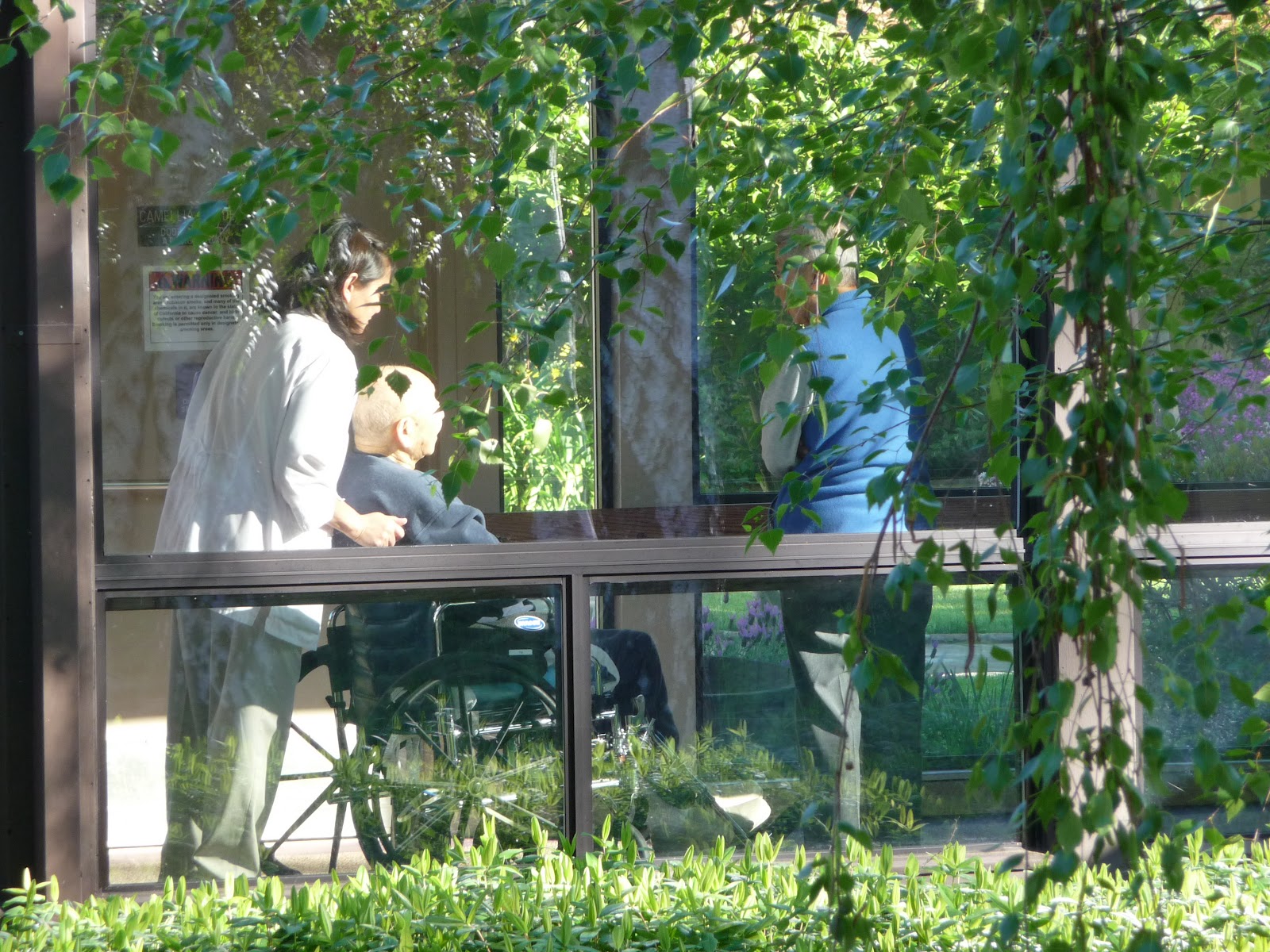
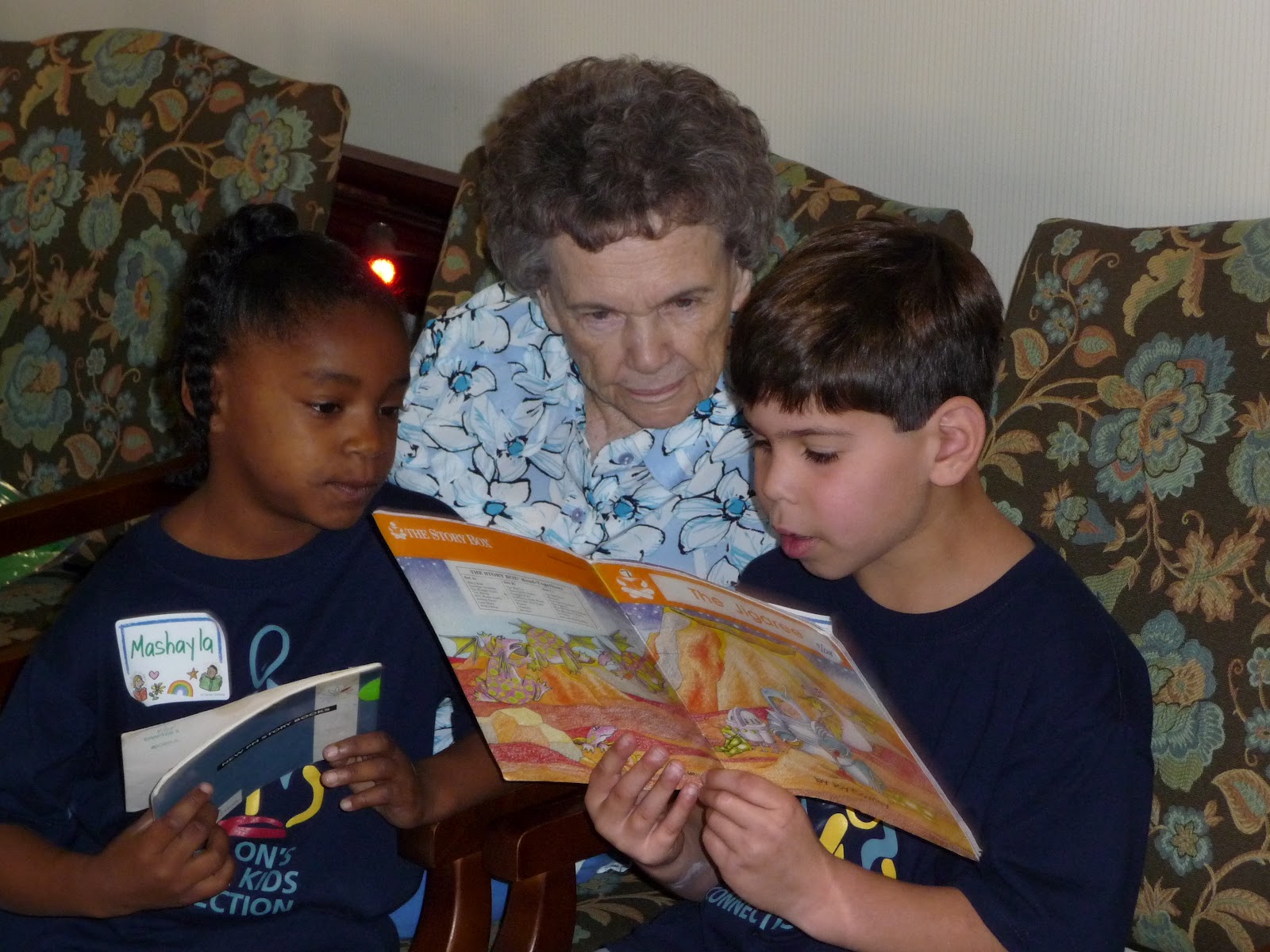
STUDENTS TAKE WELL TO AGING EXPERIENCE. If three first-semester nursing students from California State University, Sacramento who recently volunteered at an Eskaton assisted living and memory care community are an indication, the future of aging services is in good hands.

The students’ follow-up letter to Eskaton acknowledges the quality of aging services today. But just as importantly, these future nurses’ enthusiasm offers encouragement for how we are inspiring a new workforce.

Their letter begins: “THANK YOU for the wonderful opportunity you gave to me and my friends today. Volunteering at Eskaton was not only fun, interesting and sometimes even challenging, but it was also a great learning experience for us first semester nursing students.”

About their staff guide, the volunteers wrote: “She really took her time with the Eskaton residents and provided a nurturing environment that made it feel like it was an Eskaton family. We really felt the caring energy radiate from her.”

The students’ letter concludes: “Your staff and residents have made our volunteer opportunity at Eskaton an unforgettable experience, and we are looking forward to coming back for the summer.”

“Welcome home to Eskaton.” And, “Welcome home to a new aging experience and great learning opportunity.

Tuesday, March 20, 2012

CONTEXT IS BETTER THAN MORE TEXT.

CONTEXT IS BETTER THAN MORE TEXT. It used to be said that “information is power.” Now that we’re deluged with more information (reports, articles, proposals, documents of all sorts) than we can ever practically assimilate, what matters more is effective quality control.

For a piece of information to “break through the clutter” competing for readers’ limited attention, the essence of its message must be presented simply and with context.

Ironically, two of the most complex thinkers in history preached simplicity. Albert Einstein said, “If you can’t explain it simply, you don’t understand it well enough.” Steve Jobs’ fundamental principle of “Simplicity is the ultimate sophistication,” was elaborated upon by his lead designer Jonathan Ive, who said, “You have to understand the essence of a product in order to be able to get rid of the parts that are not essential.”

Einstein also taught us mathematically that what we observe depends on where we stand in space and time. In earthly terms, context defines the relativity and relevance within the expression of ideas, commentaries, advertising ... all attempts at persuasion.

There is a stronger than ever case to be made for simple, traditional journalistic writing; highlighting the key points in the first paragraph -- the who, what, when where ... and why -- and then including the rest of the text in descending order of importance (in an inverted pyramid). This respects the readers’ judgment to decide whether the information is worth the time, and demonstrates the writers’ confidence that it is.

Monday, March 19, 2012

CREATIVITY IS IN THE MIND OF THE BEHOLDER.

CREATIVITY IS IN THE MIND OF THE BEHOLDER. “Individuals with Alzheimer’s have a way of seeing things in art that we don’t see,” explains Tiffany Paige, who directs the Sacramento chapter of ARTZ: Artists for Alzheimer’s. The national nonprofit and Eskaton have partnered to bring “ARTZ Delivers” art appreciation workshops to Eskaton Memory Care communities; and this summer to coordinate public tours of Sacramento’s Crocker Art Museum and California Museum for residents of the communities.

Research documents that engaging in creative activities – like making art and touring museums – can help dementia patients with concentration and communication skills.

“Tells about the future,” said one resident when describing a painting of the American River during a recent ATRZ Delivers presentation at Eskaton Lodge Gold River. “In the picture the way things will be. All things on earth will be like they are in heaven. Keep on with your work and you will be happy,” the resident shared further.

About a painting of a rustic farmhouse, a 100-year-old resident exclaimed, “It’s the story of America. It’s where I came from. It tells about life.”

Eskaton sponsors Artists for Alzheimer’s and a number of other creative therapies in its Memory Care communities within Eskaton Village Carmichael, Eskaton Lodge Gold River, Eskaton FountainWood Lodge, Eskaton Village Roseville and Eskaton Village Placerville. Plans are being made to bring ARTZ Delivers to The Parkview in Pleasanton later this year.

Tuesday, March 13, 2012

POLST CONFRONTS DEATH; COMMUNICATES DYING WISHES.

POLST CONFRONTS DEATH; COMMUNICATES DYING WISHES. The recent California Healthcare Foundation survey, “Final Chapter: Californians' Attitudes and Experiences with Death and Dying reported that 70 percent of people say they would prefer to die at home. Of deaths in 2009 in California, however, only 32 percent occurred in the home, while 42 percent occurred in the hospital and 18 percent in a skilled nursing facility.

Of course where one dies cannot be as predictable as where one prefers to die. Which is perhaps what was on Woody Allen’s mind when he said, “It’s not that I’m afraid to die. I just don’t want to be there when it happens.”

Californians surveyed also overwhelmingly reported that when they die they do not want to be a financial or emotional burden to their families. Yet, less than 1 in 10 report having a conversation with their doctor about end-of-life care, including just 13 percent of those ages 65 or older. Less than one-quarter have put their wishes in writing; and more than half have not had a conservation with their families about the kind of care they want at the end-of-life.

Nearly two-thirds of Californians polled on the subject have stated they would complete a POLST (Physician Orders for Life-Sustaining Treatment) form if they became seriously ill.

POLST is a standardized medical form that indicates the specific types of life-sustaining treatment a seriously ill patient does or does not want. Signed by both the patient and doctor, POLST becomes a set of medical orders that moves with the patient from home to hospital to skilled nursing facility.) “This is the perfect tool for encouraging conversations between families, patients and their doctors,” explains Chris Evans, a registered nurse and chair of the Sacramento Area POLST Coalition.

So, there is at least one tangible takeaway from these reported contradictions about death and dying. It’s the bright pink POLST form. You and Woody may not want to be there when it happens, but death is inevitable ... and can be that much less painful for your survivors when you help unburden them from some of the associated emotional and financial burdens. Talk with your doctor about whether POLST is right for you.
Final Chapter: Californians’ Attitudes and Experiences with Death and Dying,”

Tuesday, March 6, 2012

LONGEVITY IS A NATURAL RESOURCE WORTH “EXPLOITING.”

LONGEVITY IS A NATURAL RESOURCE WORTH “EXPLOITING.” Eskaton’s commitment to natural resources includes energy efficiency, ridesharing, recycling and waste management. But, undoubtedly, the most respected natural resource within Eskaton’s 30 communities is our resident population -- the 3,500 older adults with energy, time and wisdom to spare.

Longevity truly is a rare asset, one worth conserving and “exploiting.” It has the capacity to fuel the economic engine, concentrate brainpower on innovation, add stability in unstable times, and provide safety in numbers (at a rate of 10,000 people turning 65 every day.)

“The shame is that we’re only looking at the problems,” said Laura Carstensen, director of the Stanford Center on Longevity in a recent interview with the Stanford Report. When, in fact, she reminds us, “the number of older people in the world is the only natural resource that’s actually growing.”

Carstensen is among a handful of authorities on longevity who gives applicable context to facts and numbers, rather than simply reporting them for dramatic effect. And, more importantly, she focuses on solutions rather than problems. For example, with respect to “retirement,” she makes the case in the SR interview that “money from 40 years of work can’t fund 30 years of retirement.” Instead, she proposes to spread out work for more years, cut the number of working days per week and the hours worked per day, and to integrate more sabbaticals into working schedules to give more time to other obligations.

This exemplifies the transformative thinking that values older adults and longevity as a natural resource, and as a benefit rather than a burden. Science, government and too many people associate age with decline. When instead we should appreciate that with age comes knowledge, experience, perspective and contextual thinking; as well as emotional stability and purposeful engagement.

Eskaton’s residents exploit their resourcefulness daily through volunteerism, mentoring and “encore careers.” It’s inspiring to witness, though they would claim it’s only natural.

Tuesday, February 28, 2012

FALSE DEADLINES WITH GOOD INTENTIONS.

FALSE DEADLINES WITH GOOD INTENTIONS. No one resents a “false deadline” more than me. But then I am responsive -- a professional imperative for journalists. Publishing and handful of other professions (i.e. tax preparers, hostage negotiators, military generals) live and die by real deadlines. Too many others, however, use deadlines as casual reminders or threats or worse -- to burden subordinates with making up for wasted time. The false deadline can be identified for having no actual consequences once missed.

Conversely, “false deadlines,” when used with discretion, can serve a useful if not universally successful purpose. They can minimize your stress and calm your ulcer by obligating habitual procrastinators (i.e. lawyers, insurance agents, unnamed coworkers) to work with you instead of against you; in your time zone where time is money and accountability counts.

Ideally, the best way to reconcile the contradictory use of false deadlines is for all so-called ”professionals”  to value time as a shared gift rather than a personal possession.

Tuesday, February 21, 2012

TAKING A NEW ROUTE DOWN MEMORY LANE.

TAKING A NEW ROUTE DOWN MEMORY LANE. Branding and marketing for aging services can be a complicated, almost schizophrenic proposition as providers attempt to balance the needs of the current generation of consumers with the desires of the next generation of Boomer consumers.

Certain appeals always resonate: value, personal connection, supportive independence, everyone is aging (“aging is an active verb”), among others.

Others are not so universally accepted -- by one generation or another.

Take the new “graphic wraps” Eskaton applied to the transportation vans for community living residents. The colorful “mobile billboards” are accomplishing the purpose of attracting plenty of attention as they cruise about Northern California. The implied message is that Eskaton communities are contemporary, proud of our brand and home to vibrant older adults. While everyone agrees the new design clearly distinguishes the previously nondescript white buses, not everyone approves of the change.

“Most of us are dignified elderly people who have been proud of where we live. No longer,” one resident wrote. “That changed the day the ‘circus van’ came to town.” The note also stated that “many” residents feel this way, “but don’t wish to be involved.”

The predicament becomes trying to satisfy the subjectivity of the “many” with neutral, undistinguished branding. Or, veering off memory lane and on to the expressway where -- even though, or especially because -- the landscape is cluttered with messages competing for the attention of our prospective occupants. This new direction is not taken cavalierly; consideration for the dignity of our current residents remains paramount.

The majority of our residents, thankfully, do appreciate that the newly designed vans can serve the dual purpose to drive them about town and drive traffic to the community.

Tuesday, February 14, 2012

ESKATON WHETS ITS APPETITE FOR ADVOCACY.

ESKATON WHETS ITS APPETITE FOR ADVOCACY. Eskaton has been dipping its toes into the public policy arena over the past year. One effort produced quite a splash. Another created a ripple effect. And a third was just for show.

ADHC RALLY -- February 1, 2011: Adult day healthcare lives to fight another day. Or, more accurately, fights to live another day. Dozens of older and disabled adults, many in wheelchairs, and all participants of Eskaton’s Adult Day Health Center rallied at the California State Capitol on February 1, 2011. The very demonstrative appeal to legislators and the Governor to save the state’s adult day healthcare generated dozens of news stories and supported the successful grassroots advocacy to preserve the program. Senate Pro Tempore Darrell Steinberg joined with participants that day. While Assembly Member Mariko Yamada, chair of the influential Assembly Committee on Aging and Long-term Care, issued a statement in November on the program’s protected status: “We must continue to fight for this program and all programs that help our most vulnerable elders and disabled adults live in the community with dignity while also saving the state money.”

THRILL OF A LIFETIME -- January 2012
Upon returning from his triumphant reunion in Japan with his brother from whom he was separated as a result of WWII more than 60 years ago, Eskaton resident Minoru Ohye was the guest of honor at a State Capitol reception hosted byAssembly Member Mariko Yamada. The 86-year-old Ohye participated in Eskaton’sThrill of a Lifetime initiative, which thanks to the support of Yamada and the generosity of private donors, arranged for Mino and his brother Hiroshi to enjoy a thrilling, week-long reunion in Japan. “I am ‘thrilled’ beyond words,”said Yamada, who worked closely with Eskaton staff leading up to and during the extraordinary trans-Pacific reunion.

“ONE NATION, UNDER AGE” -- October 2010 – July 2011
Eskaton’s “Generation Nation: One Nation, Under Age” photography exhibition shares the poignancy and positive benefits of positive interaction between youth and older adults. The 12 photos featured individuals from Eskaton’s Kids Connection project and Generations United’s international photography contest. The exhibition premiered October 2010 on the historic Governor’s Marble Wall at the California State Capitol where tens of thousands of visitors as well as the governor, legislators and staff viewed and read the story behind the powerful imagery. After touring throughout Northern California, the exhibition traveled to Washington, D.C. in July 2011 for a special viewing at GU’s annual conference.

Formal legislative advocacy, lobbying, surely has a role in attempting to influence a positive aging experience, though favorable outcomes require enormous commitments oftime and resources. On the other hand, while Eskaton’s recent public relations strategies may not stem concerns about the encroaching “Silver Tsunami,” the exposure and goodwill certainly do influence public opinion. And that attracts everyone’s attention, even elected officials.

Tuesday, February 7, 2012

STRATEGIC THINKING STARTS WITH ASKING “WHY?”

STRATEGIC THINKING STARTS WITH ASKING “WHY?” Why can be the most difficult and frustrating of questions. Every parent whose been challenged by their child’s curiosity -- Why is the sky blue? Where do babies comes from? Why do I have to go to bed? – knows that the bigger the question the tougher the answer.

Unfortunately, parents’ inadequate answers and lack of patience do little to feed our children’s insatiable curiosity. Instead their sponge-like minds too often absorb lazy responses like “That’s God’s favorite color” or “storks” or “Because I said so.” Until finally, invariably, unfortunately, most children outgrow their boundless curiosity.

But then, later in life when we need to ask big questions and think strategically, adult-size curiosity can be difficult to muster. And even when someone is brave enough to interrupt a rambling presentation with “Why?” the response is usually a blank stare, or more rambling.

Consider, for example, big concerns related to aging such as healthcare, affordable housing, home support services. Progress based on the narrow thinking and messaging of special-interest groups is getting us nowhere.

Abstract numbers and unfathomable worst-case scenarios do not resonate with the average person, who is every cause’s number one target audience.

Instead, we need relatable messages -- that explain why and how these concerns are personal, and that take advantage of the biological fact that aging impacts everyone, of all ages.

When a child asks “Why do we grow old,” we should be able to answer “Because it’s good for you.”

Wednesday, February 1, 2012

AROUND THE WORLD IN OHYE DAYS.

AROUND THE WORLD IN OHYE DAYS. [Installment #4] Back in time to make his Tuesday morning golf date, Minoru Ohye returned safely this past weekend from his whirlwind reunion with his brother in Japan from whom he was separated six decades ago. The week-long Thrill of a Lifetime experience sponsored by Eskaton coincided with Ohye’s 86th birthday which he was fortunate to celebrate with his brother Hiroshi.

His Tuesday also included an afternoon reception held in his honor at the State Capitol with Assemblymember Mariko Yamada. Yamada, who chairs the California State Assembly Committee on Aging and Long-term Care, helped organize a fundraiser to support the Thrill and about its success exclaimed, “I am ‘thrilled’ beyond words.” Consul General of Japan Hiroshi Inomata, who helped with the Thrill’s logistics, made a special trip from San Francisco to greet Ohye as well.

[pictured from left: Eskaton’s Suzanne Strassburg, Assemblymember Mariko Yamada, Eskaton’s Debbie Reynolds, guest of honor Mino Ohye, Consul Tomotaka Kuwahara, Consul General Hiroshi Inomata, Consul Takemichi Nagaoka]

Also receiving special recognition at the Capitol event were Suzanne Strassburg, director of Eskaton’s Thrill initiative and this elaborate production; and Debbie Reynolds, administrator of Eskaton Wilson Manor in West Sacramento where Ohye lives. Reynolds initiated the reunion Thrill after learning from Ohye of his extraordinary military record and how his experience as a P.O.W. separated him from his brother.

Tuesday, January 31, 2012

LOW PRICE AND DEADLINES CAN BE BITTERSWEET.


LOW PRICE AND DEADLINES CAN BE BITTERSWEET. “The bitterness of poor quality remains long after the sweetness of low price is forgotten.” It’s an anonymous admonition, but it speaks volumes. And if you append the additional criteria “or meeting an arbitrary deadline,” its message is even louder and more clear.

Quality is memorable. It is held in high esteem. Low price and deadlines are fleeting. As is the benefit of their immediate gratification.

The only thing to trump quality? Value: the singular distinction shared by the most successful services and products.

Friday, January 27, 2012

BROTHERS’ THRILLING REUNION CONNECTS THE WORLD.


BROTHERS’ THRILLING REUNION CONNECTS THE WORLD. [Installment #3] Thanks to Associated Press writer Yuri Kageyama and photographer Shizuo Kambayashi, the team who chronicled Eskaton’s Thrill of a Lifetime reunion of brothers Mino Ohye, 86, and Hiroshi, 84, billions of people across the globe were able to experience their extraordinary story vicariously.


So far, more than 250 newspapers and radio and television stations reported on “Brothers reunited in Japan after six decades apart.” From Japan to the United States, from Australia to India to Kuwait, the feel-good story captured the attention of editors and readers and viewers. And donors, too, who have asked how to contribute to the Thrill program.

“How are you going to top this?” The refrain is music to the ears of Eskaton’s Public Relations Department staff. Though this Thrill of a Lifetime may be a once in a lifetime experience, the benefits continue to multiply. Among them, the resounding validation of the adage “Success has a thousand fathers while failure is an orphan.” The Thrill initiative’s profile around the world is higher than ever, and now so too is support within the organization. In fact, the depth of involvement in coordinating this successful venture has produced many proud, bumper-sticker sporting parents.

Yet, it is another entertaining takeaway from the experience that’s taught us something more endearing: There are two types of people in the world, those who love Mino Ohye … and those who have not yet met him.

Ohye returns home to Eskaton Wilson Manor in West Sacramento on Saturday, January 28. Watch for a fourth and final installment.

Tuesday, January 24, 2012

SPATIAL AWARENESS AND “PROPRIOCEPTION.”

SPATIAL AWARENESS AND “PROPRIOCEPTION.” Not unlike “Munchausen syndrome” or “echolalia,” “proprioception” is one of those cool medical terms that when removed from its clinical context, offers up opportunity for humorous misappropriation.

Officially, proprioception refers to an individual’s position-movement sensation or “sense of locomotion,” as originally described. In other words, it is one’s own sense of perception of the relative position of parts of the body. (For example, law enforcement employs this in the field sobriety test that requires a subject to touch his or her nose with eyes closed.) Walking and chewing gum at the same time is another oft-cited test.

Consider proprioception as the evolving affliction of “spatial retardation.” It manifests itself most noticeably with cellphone misuse, but also in a broader sense through individuals’ lack of awareness of their surroundings; rudeness; and actions that show general disregard for others’ space and time.

Aging, maturity and social moirés influence our understanding of proprioception. Next time you witness an older adult wandering seemingly without direction or waiting for a chair to stop moving in order to sit down, think of those much younger and healthier social misfits who give new meaning to faulty proprioception.


For example, there’s the individual who walks into a mall fountain while texting; or who stops in the middle of the road to chat with friends; who’s blather sucks the air out of the room; who doesn’t offer their seat to an older person getting on a bus; who stands in the front row of a concert; who sneezes into their hand and then extends it to shake; who lets one rip in a crowded elevator; and worst of all, who races past stand-still traffic to the end of the merge lane and expects others to allow him or her to cut ahead.

In a civilized world, we would be more patient with people, especially older adults, challenged with their own proprioception. And perpetrators of anti-social proprioception or spatial retardation would be ostracized or cited.

Monday, January 23, 2012

EXHILARATION AND RELIEF AS BROTHERS REUNITE.

EXHILARATION AND RELIEF AS BROTHERS REUNITE. [Installment #2] The most extraordinary aspect of Eskaton’s Thrill of a Lifetime program is that it provides rewards well beyond the Thrill recipient. Everyone that the Thrills touch share in the anticipation, excitement and inspiration.

All for this moment: The photo of Mino Ohye, the Eskaton Wilson Manor resident who reunited today -- on his 86th birthday! -- with his brother Hiroshi in Japan from whom he was separated nearly 60 years ago, records the actual thrilling reconnection.

And now everyone involved in making this happen can breathe a sigh of relief, and bask in the Thrill as well.

Thrill of Lifetime director Suzanne Strassburg is the dedicated logistical magician behind the production. 

Eskaton Wilson Manor administrator Debbie Reynolds discovered Mino’s remarkable story, and helped bring it to fruition. 

California State Assemblymember Mariko Yamada hosted the fundraiser Eskaton sponsored at the West Sacramento VFW to raise funds for the trip; and linked Eskaton with the Japanese Consul General in San Francisco, whose connections with Japan Airlines and others provided additional support and reassurances. 

Eskaton Foundation upped the experience a notch as well; donor Jose Kirchner contributed Mino’s executive-class flight. 

And Brian Berry, a California State University, Sacramento doctoral student currently living in Japan, is serving as Mino’s travel companion and interpreter. (Eskaton was connected with Berry by CSUS associate professor Kazue Masuyama, Ph.D.) One of his regular updates follows:

BIG DAY TODAY … THE REUNION WAS A HUGE SUCCESS.

Hiroshi brought his son and his son's wife along, and had brought a very large cake. One of the largest I had seen in Japan. They had it special ordered. There was an exchange of gifts, including one for Debbie. Hiroshi also said very clearly to give a huge thank you to Mariko Yamada. They were very grateful for everything, and I promised them I'd let you all know that as soon as possible.

There were plenty of hugs. The Associated Press came along and Hiroshi agreed to be filmed even during the reunion moment and even interviewed during the whole time. I'm very glad I had the crew I did, as they were extremely cooperative and considerate. They recorded the exact moment when they finally met after almost 60 years as well. I made sure to use a portion of [Eskaton’s money] to pay for a nice special dinner for Hiroshi, Minoru-san, and Hiroshi's son and the son's wife. They insist on paying for the next lunch though.

They were very relaxed and very happy by the end of the night, and it went great.

Total success!

Brian Berry

* Google "Eskaton" to enjoy the international news coverage.


Friday, January 20, 2012

MINO OHYE DEPARTS ON ESKATON’S GRANDEST THRILL YET.


MINO OHYE DEPARTS ON ESKATON’S GRANDEST THRILL YET. [Installment #1] Today Minoru Ohye, 85, a resident of Eskaton Wilson Manor in West Sacramento, embarks on his extraordinary Thrill of a Lifetime to reunite with his brother in Japan, from whom he was separated in the midst of WWII more than 60 years ago. Updates on this film-worthy story will be relayed regularly during his week-long trip.

Tuesday, January 17, 2012

WIN PUBLIC APPROVAL: PLAY BILLIARDS RATHER THAN POOL.

WIN PUBLIC APPROVAL: PLAY BILLIARDS RATHER THAN POOL. The most effective public relations endeavors are those validated by respected, impartial authorities. This represents to targeted audiences that your goals are important and clearly in the public interest.

“Independent validation,” as described by Edward L.Bernays, founder of the public relations profession, “is analogous to playing the game of billiards rather of pool. If you assert yourself directly on elements of society, as one ball hitting another, you will be labeled a propagandist by those whose attitudes and actions you are attempting to modify.

“However, if you have independent sources deliver your message indirectly, as a billiard shot uses a cushion before hitting its target, you are more likely to gain acceptance.”

Tuesday, January 10, 2012

IT TAKES A VILLAGE … WITH AGING SERVICES.


IT TAKES A VILLAGE … WITH AGING SERVICES. Beacon Hill Village and other so-called Naturally Occurring Retirement Communities (or NORCs) continue to generate curiosity, support and positive media coverage. The practice of older adults banding together as “villages” to assist one another is certainly commendable. Aging Services of California most recently featured the cover story “Villages: A New Take on an Old Idea” in its January 2012 edition of the monthly agenda journal.

So … how do villages or NORCs relate to those independent and assisted living communities and skilled care centers provided by aging services organizations? It is a legitimate question, though one that is variously side-stepped by village elders as well as aging services providers. The agenda article by Susan Poor, an advisor to the newly formed Village-to-Village Network, effuses that “…we are only at the tip of the iceberg in witnessing the creativity and innovation that can emerge from the Village movement.” True, perhaps, but, again, this prolific movement begs the questions, How do and will they affect professional aging services providers?

Most Villages outright state or infer an objective is to keep members out of institutions. Some more proudly than others: Beacon Hill Villages’ website features a CBS News story (1-14-07) that interviews member Dorothy Weinstein, 98, identified as the Villages’ “poster child.”

The reporter asks Weinstein: “Have you ever thought about going to a retirement community?” To which she responds: “No, no, no. I just couldn’t place me in one of those places. What would I do all day? Here at least I’m somebody. There I would be a nobody.” Not exactly a glowing endorsement, nor an invitation to work together to, say, help those villagers who become too ill or frail to live at home.

Eskaton’s new Live Well at Home program attempts to provide supportive services that balance individuals’ desire to age-in-place with the occasional or eventual need for professional aging services. “Your home. Our experience.” the literature reassures. The evolution of care for older adults may include brick-and-mortar communities and care centers, programs such as Live Well at Home, natural Villages or some new hybrid. Since no one knows for sure, it only makes sense that more options, better collaboration and mutual respect will benefit everyone.

Tuesday, January 3, 2012

ESKATON DEFINES “LONGEVOUS.”

ESKATON DEFINES “LONGEVOUS.” Eskaton, the “Official Sponsor of Longevity,” begins an especially longevous new year with 39 centenarians and another six 99-year-olds. Collectively, this is a significant accomplishment -- in fact, the ratio of age 100+ individuals in Eskaton’s population is 50 times greater than in the general population -- but more importantly each centenarian represents an extraordinary individual accomplishment.

Last year we boasted Eskaton was a “Blue Zone.” Though done so with tongue-in-cheek, the claim drew some constructive criticism.

Jay Olshansky, author of The Quest for Immortality and professor at the University of Illinois at Chicago, was right to clarify. Eskaton illustrates the “power of migration,” he noted in response to the earlier “Blue Zone” boast/post. “The concept of Blue Zones applies only to largely closed populations where the prevalence of exceptionally old people is influenced by something other than people moving from place to place,” he explained.

Olshansky added that referring to Eskaton as a Blue Zone “is equivalent to suggesting that we should all move into homes of senior care because the average age of residents is higher than the rest of the population.”

Granted Eskaton is not technically a “Blue Zone,” though its population certainly defines longevous or “long lived.” So maybe we can claim to be a “Migratory Blue Zone,” populated by individuals who made the move to live longer … at home with Eskaton.

Tuesday, December 27, 2011

GILT-EDGED BY ASSOCIATION.


GILT-EDGED BY ASSOCIATION. One of the most effective ways to enhance an organization’s reputation is to establish connections with highly regarded institutions, causes, values, even words.

Eskaton’s public relations’ endeavors include the constant pursuit of golden or gilt-edged associations – those that resonate favorably with the general public as well as with the organization’s mission and targeted audiences. For example:

§   The Eskaton Kids Connection partners schoolchildren with residents in our communities. This association with local public schools demonstrates that Eskaton values education and social engagement throughout the aging process.

§   To share our appreciation for veterans, Eskaton produced West Sacramento’s first-ever Veterans Day Parade, which established a high-profile association between the small town’s military heroes and Eskaton.

§   Eskaton’s Thrill of a Lifetime initiative “makes dreams come true” for our older adult residents; and vicariously associates Eskaton with hope, enthusiasm and purposeful longevity.

§   Longevity Rules, the 2010 book edited and published by Eskaton, features essays by 34 nationally renowned experts on longevity. The project advanced Eskaton’s national stature as a credible, impartial resource for policy shapers, academicians, healthcare professionals … and consumers.

The influence cultivated through the associative process continues to be one of the most dependable tools in the public relations professional’s toolbox.

Tuesday, December 20, 2011

ALZHEIMER’S THERAPY NOT FOR "DUMMIES."

ALZHEIMER’S THERAPY NOT FOR DUMMIES. Pet therapy. Yes. Music therapy. Sounds good. Humor therapy. Good for a laugh and healthy. But ventriloquism therapy? Hmmm? AARP Bulletin reports that several care providers are using ventriloquism to connect with and engage Alzheimer’s patients.

“Some respond by touching or kissing the characters while delighting in the ‘second childhood,’” says one of the ventriloquists on behalf of her dummy friends.

Time for a reality check: Yes, it is advised to meet Alzheimer’s patients in their own reality, whether it be talking to dolls or believing one to be their own child. That said, therapy should not be patronizing, nor should it simply encourage living in the past. Can Ed Sullivan reruns with Topo Gigio be far behind!?

Alzheimer’s patients are adults who deserve to be treated with dignity, with adult children who yearn to experience what time they have left with their parent … in the present, as often as possible.

Alzheimer’s patients do benefit from many creative therapies. Of the most empathic, the response should be for individuals and families to appreciate each new day, to anticipate the future, and to respect their wonderful memories; and not simply relive their past. This is the challenge and reward each day with Eskaton's "Dawn of a New Day" Memory Care Centers

Tuesday, December 13, 2011

ESKATON EMBRACES "GENERATIVITY."

ESKATON EMBRACES GENERATIVITY. Eskaton embraces the philosophy of generativity -- one generation helping the next -- by practicing comprehensive resource conservation. Energy and water use efficiencies, solar power, recycling, ridesharing and biodegradable cleaning products are commonplace. Eskaton’s promotion of “green living” extends to our Livable Design by Eskaton guidelines for builders as well.

Another, growing commitment to sustainable development is the proliferation of urban gardens in Eskaton communities. Residents in independent living, assisted living, skilled nursing, affordable apartments, even memory care enthusiastically tend to the seasonal vegetables. The bounties are then shared amongst residents, staff and neighbors.
Learn more about the Eskaton Ecology Initiaitive.

Tuesday, December 6, 2011

CAREFUL NOT TO BE A “SLAVE” TO RESEARCH.

CAREFUL NOT TO BE A “SLAVE” TO RESEARCH. As useful as attitudinal surveys can be, there is a risk to becoming a “slave” to public opinion research. Results from tracking politics, marketing or issues, oblige interested parties to make judgment calls, especially when the findings contradict a planned course of action. The choices then are to: 1) change direction to follow the results, or 2) stay the course and commit to adjusting public opinion to follow what is believed to be a better path.

More often than not, and usually with some angst, courses are changed. This option, though, is more suspect and complicated when survey responses are based on speculation about the future.

A perfect example, related to “aging,” is the proliferation of surveys indicating most all Baby Boomers want to age in their own homes, not in “retirement” or skilled nursing communities. At Eskaton our anecdotal research among residents contradicts this attitude and has prompted us to plan to quantify these findings by surveying our full population of 3,000.

Of our sampling of residents, whose average age is 83, none planned to live in our communities when they were healthy 65-year-olds (which is significant because most Baby Boomer surveys measure opinions of people 65 and younger). Conversely, now that they’ve experienced “community living,” the most common response is “I wish I would have done this sooner.”

To further marginalize the value of many attitudinal surveys, ask who can say with certainty what they will want or need 20 years into their future. In fact, many of us think differently today than yesterday. It is human nature to reprocess as we gain more information and adjust to new circumstances.

Eskaton accepts that most people will always prefer to age in their own homes; and we now provide an array of home support services and even offer “livable design” counsel to homebuilders. But, at the same time, we continue to prepare our communities for the 5-10 percent (of the 78 million individuals) in the next generation of older adults who, as history repeats, will eventually want or need the health and social benefits of our community living options.

As Mark Twain infamously quipped, “There are lies, damned lies and statistics.” Not that we’re calling anyone liars, but we’re not acknowledging anyone’s fortunetelling credentials either. We’re just keeping our head in the game so  as you round the bases and head home, we’ll be ready.

Tuesday, November 29, 2011

WHAT IT TAKES TO BE A "REAL" IDEALIST

WHAT IT TAKES TO BE A REAL IDEALIST.  U.S. copyright law protects original works of authorship. This excludes, as the government website (randomly) makes note: band names and Elvis sightings, as well as methods of doing something … and ideas. In the case of the latter, the idea, the intent of this qualification was dramatically clarified by the Mark Zuckerberg character in “Social Network,” who scornfully replied to the Winklevoss brothers’ claim that Facebook was their idea: “If you guys were the inventors of Facebook, you’d have invented Facebook.”

The pretext is that ideas are a dime-a-dozen. But that it takes ingenuity, perseverance and hard work to bring words to life, which is why so many enthusiastically proposed “great ideas” never leave the launch pad. As management expert Peter Drucker famously warned, “Every great idea eventually deteriorates into work.”

Conference presenters at several recent aging services gatherings spoke of age-friendly cities of the future; life-changing new assistive technologies; breath-taking robotics; and other responses to positively influence the longevity revolution. For sure, to transform anything, let alone something as significant as our aging experience, requires such vision. But it also requires commitment. The true visionaries throughout history – Gutenberg, Edison, Jobs, Zuckerberg, etc. – were also realists and painstakingly turned their visions and ideas into action.

To succeed as a creative thinker, one cannot be discouraged by the immense challenge of birthing ideas … or distracted by the false praise heaped upon idea posers. After it’s all said and done, “You are what you do, not what you say.”

Tuesday, November 22, 2011

HUMOR THERAPY IS A (GOOD) JOKE.

HUMOR THERAPY IS A (GOOD) JOKE. George Burns famously deadpanned, “When I was a boy, the Dead Sea was only sick.”  And Henny Youngman joked, “I’m so old that when I order a three-minute egg, they make me pay up front.” Self-deprecation is funny … and healthy, too.

The most recent validation of laughter being the best medicine comes from the University of South Wales in Australia. In 36 Australian residential care communities, therapists with comedy and improvisation training shared 12 weeks of playful interactions with residents. The results were a 20 percent reduction in agitated behavior among residents with dementia. The humor therapy helped reduce “physical and verbal aggression, wandering, screaming, and repetitive behaviors and questions,” according to the research team. And, researchers note, the happiness and positive behavior remained lower through the 26-week follow up.

So smile when someone tells you, “You’re so old your blood type was discontinued.” You may just get the last laugh.